Posts

Poila Boishakh

Image
The pictures are of a krishnachura in full bloom and of a Kalboishakhi There are two times of the year when I miss my native Bengal the most. At all other times I can be severely critical of my country, but during the New Year and the Pujas, I cannot but remember only the positives of my country. And I am not ashamed to say that during these times, “my country” shrinks to Bengal, I may include Bangladesh in this, but while I am proud of my Bharat, in this case I mean Bengal. The Poila Boishak brings the New Year to Bengal. It is also the start of the summer. The mellow winds of the Basanta (spring) season give way to the blazing sun of the Grishya (summer). The Mango flowers are now gone and the fruit hangs from the trees. The trees are full of unripe mangoes that then slowly ripen and by the end of the summer will be available in the markets. I spent a half year in Malda, the home of the finest mangoes in Bengal, in the early years of my career. The health centre I worked in was surr...

Searching a scientific reference: then and now

There is a marvelous editorial in the journal Current Science dated April 10th 2010. The editorialist describes how in the good old days he used to come to the library of the Indian Institute of Science and go from shelf to shelf looking for a reference and he describes the sense of “feeling” newly arrived journals which had a distinctive smell and touch. There is sea change today as all journals have gone electronic and can be accessed on the net as soon as they are published and with the “e pub ahead of print” revolution, even before the formal print publication. It set off a train of memories for me as well. I remember the days of our thesis writing. The IPGMER , where I did my PG had a fairly decent library and the past journal issues were bound and well catalogued. The only problem was that it only went back to 1957 when it was founded. If we needed to consult anything before that, we had to go to one of the other libraries in the city. One of them was the Calcutta Medical Club...

Oh Calcutta!

Indians must be among the rudest people on Earth and among Indians, we Bengalis must be among the worst. Some of the true blue Delhiwalla’s of course run us close, but while we may not win the IPL, or the National Football League, we stand alone in discourtesy and boorish behavior. It becomes especially evident if you live outside India. Here in Malaysia it is normal for people to talk to you courteously, queue up behind you without showing any signs of impatience as you fumble around in the ATM, and people often smile at you if your eyes meet. I cannot imagine this happening in good old Calcutta. The first people you meet in Calcutta are the Immigration officials who scrutinize your passport for ages, for reasons best known to them. In Malaysia they let me enter the country in about 20 seconds and smile while they let me through, but when I try to enter my native city, they ask at least three irrelevant questions, leaf through all the pages of my passport with excruciating slowness a...

Can you teach an old dog new tricks?

Image
I have been admonished by some of my readers that my blog posts are too long. Nobody, I am told, has the time to read long perorations. I need to make my posts shorter and snappier. It started with my friend Indrani who works for the British Council in Calcutta telling me and I quote “ your blog posts are now becoming more like book chapters”. Subsequently Yachana Prakash ,who was my student at SMIMS Gangtok, now doing her post graduation in Ophthalmology in Coimbatore told me: “umm...yes i do feel your posts are long sometimes, I haven’t been able to read some fully because of the length.you do write well and i never felt like telling you the same because you pack in a lot of info in all those paragraphs and it is of a lot of value to a sincere reader but yes, take this opportunity and try to make it more reader friendly. You know we are all lesser mortals here and we want to hear god in our own language!!!” Subsequently Nipon who studies in the final year at the North Bengal Medical...

People and people and people!

Image
There is a concept in wildlife biology called carrying capacity. This means that any stretch of wildlife habitat can support only a certain number of particular types of wildlife. Take for instance the tiger. A normal full grown tiger needs about 20 square kilometers of space. Thus s particular wildlife sanctuary can only support a finite number of tigers. Once it exceeds it carrying capacity, the tigers tend to leave the sanctuary to enter areas surrounding it with often fatal consequences as recently seen in Ranthambhore where local villagers poisoned two sub adult tigers which had entered their areas from the now crowded National Park. Unfortunately nobody thinks of extending this analogy to humans. The world population has increased to 6.8 billion and shows no sign that it will level off anytime soon. There is some hope that the world population levels will level off at 9.2 billion according to some estimates, other estimates are far more pessimistic. Occasionally we see idiot re...

The National Gallery of Modern Art

Image
This time when I went to Delhi, I had a free morning which I spent in the National Gallery of Modern Art. I have wanted to visit it many times in the past, but somehow it never happened. This time I was determined to go and we went on the Saturday morning the day after we travelled up from Ranthambhore. It is conveniently located, near India Gate and it costs just Rs 10 to get in. It is a steal. Looking at it from a Malaysian viewpoint, less than one Ringitt takes you to one of the most marvelous displays of art in India. India has always been at the forefront of art since the days of antiquity. The Mauryas, Kushans and Guptas have left behind some of the best sculpture ever created. However paintings from those times have obviously not survived. At a much later age the Mughals gave rise to the Mughal Rajput miniature paintings which according to one authority” is a remarkable synthesis between the imported tastes of the Mughals and the indigenous Indian sensibility.” We saw many pa...

India and the New Economy

Image
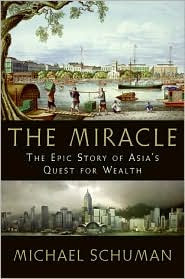
There is a fairly good library here at the Technology Park where we have our office in Kuala Lumpur. I get to read many books that I might never have read otherwise, because it has a large number of books on business, the East Asian cultures and Islamic history which had never really attracted my attention in the past. One book that I recently read was The Miracle. Written by financial journalist Michael Schuman it describes how Asia has become the success story of the past 50 years since the Second World War and more particularly since the sixties, when first Japan, then Korea, Singapore and now several other countries have broken free from poverty and reached first world status. And now the story is of China and India which are finally also breaking free from poverty levels that had remained unchanged for hundreds of years while we were under European domination. India and China were the world’s dominant economic powers until 1600 when India and China together accounted for 52% of ...