Posts

Rambles in the Darjeeling Terai 1 : The Birth of a River

Image
  The Darjeeling terai is part of the larger Terai region that extends across the southern foothills of the Himalayas, encompassing parts of northern India and southern Nepal. It is the area lying between the Teesta and Mechi Rivers. It is characterized by the Himalayan foothills, scrub savannah, sal forests, and clay-rich swamps. The region is crossed by several rivers, some of which are perennial and the rest seasonal. This region with all its huge diversity of plants and animals are very accessible to anybody living in Siliguri. However, one needs to have a guide. Those who have lived all their lives in Siliguri are familiar with most of these landscapes but for us Johnny come lately’s it is useful to have someone familiar with the tea gardens and rivers and forests of the region with us. Last year, the monsoon was delayed. In fact, there was practically no rain right from October 2022 until almost the end of June 2023, unlike this year where the rain gods have been kinder. Th...

Interview : Dr Eklabya Sharma, Ecologist and Padma Shree awardee

Image
    I interviewed Dr Eklabya Sharma, just a couple of days after the news broke that he had been awarded the Padmashri On behalf of the North Bengal Bird Newsletter. He was very busy, his phone was continuously ringing and on the particular day that we interviewed him, the Chief Minister of Sikkim was scheduled to come to his flat for lunch. Even so, he was kind enough to allot 30 minutes to us for this interview. We sat in the verandah of his third floor flat at Silver Oaks in Matigara with the welcome February sun warming us. It was a free ranging discussion and lasted a lot more than the time he had set aside for us. He talked freely about his journey to this level, his concerns about the environment and his ideas about the mitigation of climate effects (among other things).       NBBN: On behalf of the North Bengal Bird newsletter, allow me to congratulate you on the award of Padmashri. I am sure that I am joined with all our readers and well-wishers...

Life on the Moon" the first media hoax

Image
  Sir John Herschel  Sir William Herschel was born in the Electorate of Hanover in what is now Germany, but found fame and fortune in Britain where he emigrated at the age of 19. He is remembered as the person who discovered Uranus and several moons of Saturn and was instrumental, together with his sister Caroline in charting the stars with the help of superb telescopes that he and his sister constructed in their home in Bath, England. His son, Sir John Herschel was also an astronomer and, in a sense continued where he left off. However, today’s story is not of their scientific discoveries, but of how the son, Sir John was used by an unscrupulous newspaper in New York to perpetrate a hoax that led to a sensation in   the United States and the rest of the world and sold more newspapers than any other story in the past. Richard Adams Locke This was the era of the penny press, when cheap, easily available newspapers first began to come into the market. These newspapers wer...

Nalini Pakrashi: Dooars Gandhi

It is now all but forgotten, but the entire area of North Bengal, including the parts that have after partition gone to East Pakistan and are now part of Bangladesh, had a proud record of anti Imperialist struggle. Today we mainly remember the politics of the region for the Spring Thunder and perhaps the Tebhaga movement,  and well we should , because they changed the socioeconomic status of not just North Bengal but also many parts of India for ever. But the foundation for struggle was laid down by many individuals, many of whom have receded into the mists of the past. I refer to men like   Dr. Charuchandra Sanyal, Khagendranath Dasgupta, Shashadhar Kar, Rabindranath Sikdar in Jalpaiguri, Shiumangal Singh and Dr Brajendra Bose Roychowdhury in Siliguri , Putulimaya Devi in the Darjeeling Hills and many others. It is also now almost forgotten that even in the Dooars, there was a strong Independence Movement, fanned by many leaders who organized the local people and tea garden w...

The pleasures of slow travel: train to Malbazar

Image
  One of the better marketing ploys in North Bengal in recent times has been the advent of the Vistadome coach. For Rs 900 you can travel from New Jalpaiguri to Alipurduar in a comfortable, air conditioned coach with rotatable padded seating and big glass windows. It is not very well known that you can do the same journey in the same train for Rs 85 in a second class compartment. The views are, to my mind, as good and you see a slice of life that you are completely deprived of in a tourist coach.   I have always enjoyed travelling in second class compartments in slow local trains. For the past couple of years, the pandemic deprived me of the opportunity to travel thus, but now with the pandemic hopefully ebbing, I decided that the time was ripe to venture for a short trip from Siliguri to Malbazar using the Dooars route by train. The Rail Yatri app informed me that there was a train that would leave the Siliguri Junction station at 6.10 AM towards Chalsa and beyond to Alipur...

Memories of Home

Image
In today’s peripatetic existence, most people will be hard put to pin down what they consider their home. Take me, for instance. We were brought up in the residential quarters provided by my father’s employers, the Calcutta Port Commissioners, today the Kolkata Port Trust, or maybe the Shyamaprasad Mukherjee Port Trust or whatever. My father’s parental home was scattered to the winds by the time I became aware of such matters and while we loved going to my maternal grandparents in a village near Krishnanagar, it was not “Home”. For us, home was B/6 Nimak Mahal Road and then 12 Portland Park and finally my parent’s apartment in Parnasree. Some of my friends who lived in Nimal Mahal with us used to depart every winter to their “homes” in Lucknow and Delhi and elsewhere, but for us, our parents’ residence was our home. Later when I got married I have lived in a succession of places: Budge Budge, Baishnabnagar in Malda, The Lake Gardens’ Government Quarters and then successively in Pokha...

How do fish migrate to isolated lakes?

Image
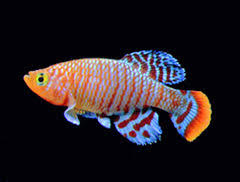
    One biological mystery that has engaged biologists for centuries is the question of how isolated water bodies come to have fish. If they are isolated, they should be devoid of fish life, right? After all fish do not fly nor do they walk overland. How then do fish reach isolated lakes of water? One of the commonest methods is by human interference. Humans stock water bodies with fish and once they are there, the fish can breed, undergo evolution and carry on normal biological processes. But where there has been no human interference, the problem is a little more difficult. Let us discount floods that wash fish species from elsewhere to an isolated lake and concentrate only on biological processes. One common theory was proposed more than a century and a half ago by the likes of Charles Darwin, and Alfred Wallace, and several others. They suggested that fish eggs could travel as passengers on the feathers and feet of aquatic birds from one water body to another. This...